Accessibility

What is personalisation?

Under this section we will cover Direct Payments and Individual Service Funds. These are alternative offers to a managed service, all three are explained below:

Direct Payments

are paid to someone that would like to and is able to manage the arrangement, either the individual or to a nominated third party, such as a trusted family member or friend. 

Individual Service Funds

are paid directly to an approved provider, who manages the budget on behalf of the individual. The provider works with the person to determine how and when care and support is delivered to meet their agreed outcomes. 

Managed Accounts

enable the Council to organise and manage care and support services on an individual's behalf. The council work with a number of approved providers who are contracted to deliver care on their behalf.

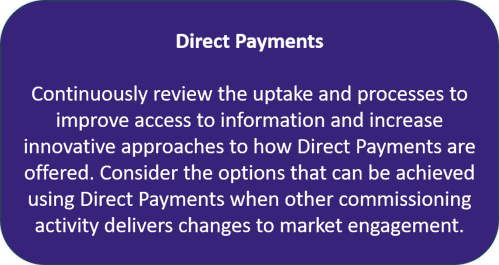
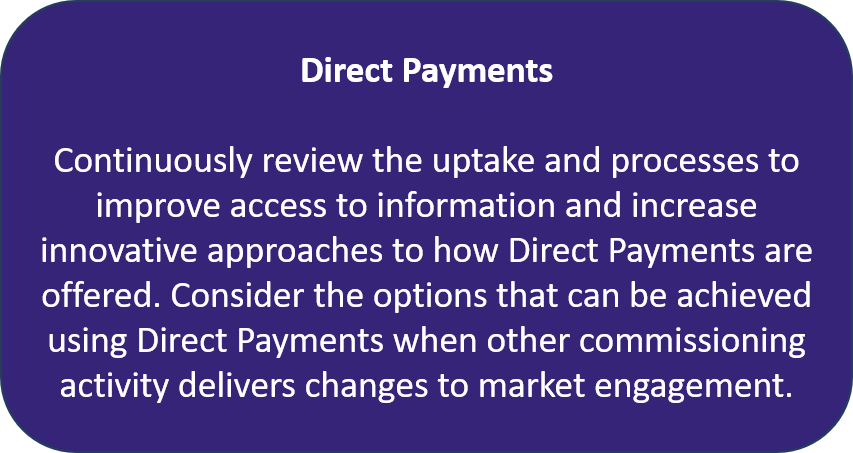
To increase choice and control, there is a need to increase and strengthen the Direct Payment Support Service as mentioned in the outcomes of the recent CQC assessment, particularly in relation to effective use of personal budgets. Internal programmes and project groups have been setup to address this and improve our offer on direct payments.


Wakefield Council currently commissions external support to deliver our direct payment offer, review activity by the commissioning team has commenced with the current contract ending this financial year. This presents an opportunity to re‑shape the offer in line with learning from the CQC assessment, emerging commissioning priorities, and the council’s statutory duties under the Care Act 2014.
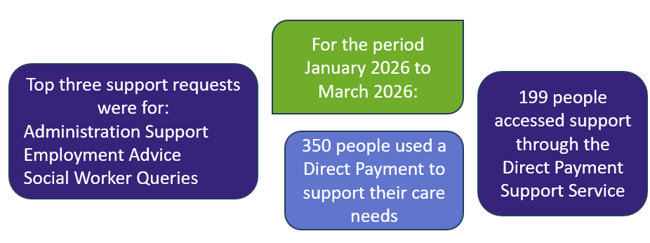
There has been consistently low demand for personal budgets, through direct payments, with an average of 22 referrals received from adult social care teams each quarter, on behalf of people wanting to manage their own care and support. However, delays from requesting to starting a direct payment can extend past the standard eight weeks setup period, creating pressures on the system to review practice and improve delivery when initiating a Direct Payment.


At present, feedback from people with lived experience highlighted that the direct payment offer is limited in scope, which restricts the innovative use of personal budgets to support prevention and early intervention. There is a clear opportunity to explore more flexible and creative approaches to using personal budgets to better support the Care Act duties to prevent, reduce and delay peoples need for more complex care and support. This includes enabling community‑based, outcomes‑focused solutions that promote independence, wellbeing and choice.


The offer around direct payments has an opportunity to develop when reviewing alongside other commissioning activity with contracted services, potentially allowing greater flexibility in the offers where contracted care could become limited.


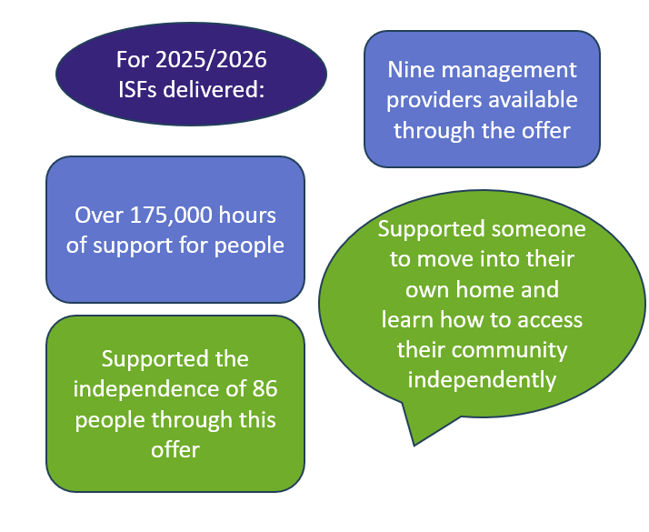
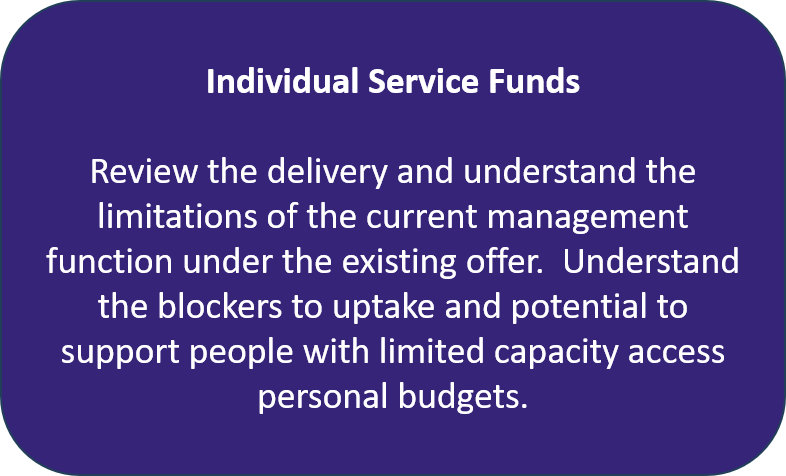
There are approximately 100 people receiving support via an individual service fund (ISF) with eight providers on the approved provider list. With the current commissioning arrangement undergoing a review, there is need to understand the limitations of the current offer and how the market can be shaped to deliver within these areas. One such aspect is the management function of the individual service funds, whereby the individual service fund provider is solely managing and not also delivering care, this offer needs to be developed and strengthen to truly reflect the outcomes required.


There is still a higher percentage of individual service fund providers from the original pilot, which focused on supporting people with learning disabilities. Therefore, commissioning will need to raise awareness of the expectation on providers, working to improve the offer, not only to increase capacity, but develop a consistent approach of good quality across all care needs. This is reflected by the need to develop a wider market within the support that can be accessed through individual service funds to offer true choice of support through this service type.


To provide guidance and improve the offer, there are programmes being delivered by the Council, which includes focused work on delivery, management, processes and awareness.


Last updated: 21/08/2026