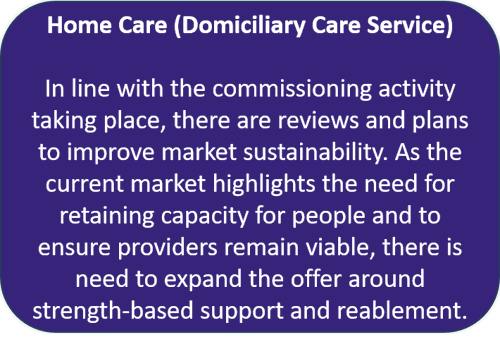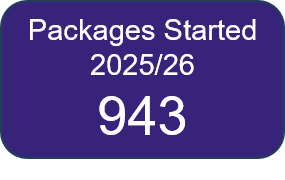
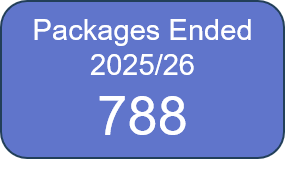
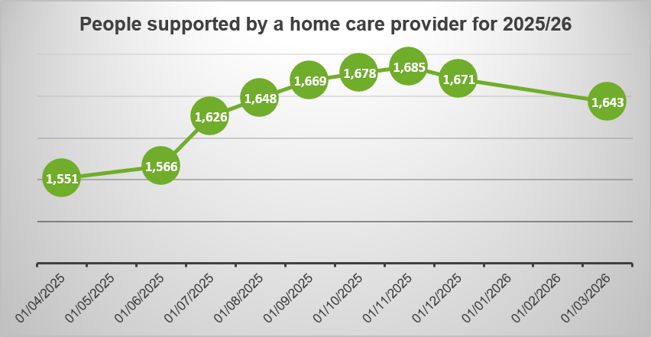
The home care market has become increasingly over-saturated following the transition from closed frameworks to open Pseudo Dynamic Purchasing Systems (PDPS). While this shift has increased capacity and choice, it has also intensified competition between providers, contributing to potential market instability and undermining long-term sustainability.
Sustainability risks are growing across the sector. Many providers are highly exposed to fluctuations in commissioned volumes and experience financial pressure when care packages are lost or reduced. This pressure, particularly for smaller and medium-sized providers, is limiting their ability to invest in workforce development, digital systems, and quality improvement.
Overall quality of care is variable. Personal care delivery is generally reported as good, and most providers are meeting care expectations. However, there are persistent operational issues that directly impact people’s experience, notably late or missed calls and inefficient rota planning. These issues are often linked to workforce shortages, travel time pressures, and poor alignment between commissioned care patterns and provider capacity, and they remain a key source of complaints and quality concern.
Workforce challenges continue to constrain performance and sustainability. There is a heavy reliance on overseas recruitment to fill vacancies across a number of providers, which has helped maintain capacity but brings additional challenges. This increases cost pressures for providers and variability in practice across the market due to the need to deliver effective training, which can be time consuming when facing staff shortages.
To increase sufficiency and deliver less restrictive services within the sector. The offer from the optimised handling service will be shared through future home care contracts, increasing capacity of this type of support, by delivering improved single-handed provision, through effective training and use of equipment.
Data quality and Electronic Call Monitoring (ECM) remain in need of improvement. There are consistent discrepancies between planned and actual hours, and care that is reported within systems. The Coordination team is regularly reviewing call monitoring returns against invoices in order to understand the impact of this.