Accessibility

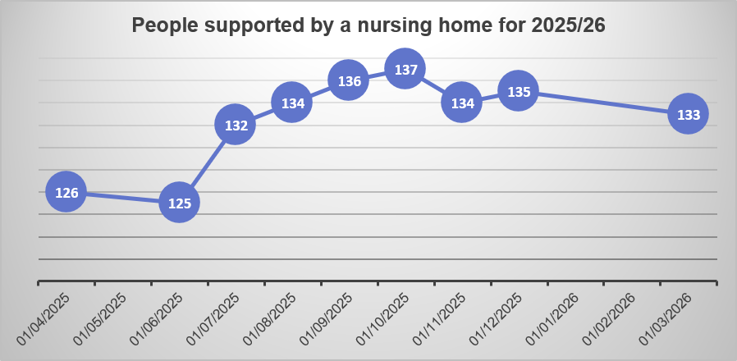
The nursing home market is sustained pressure, as of May 2026 the whole market presented an 18% vacancy rate, of a total of 429 beds. With a decline in demand during the last financial year, 2025/26, and increase in home closures or deregistration to residential, the overall capacity is reducing. This has caused a particular gap within the dementia nursing provision. Care homes that have deregistered nursing beds or ceased offering nursing care altogether, over the last financial year, stating that funding constraints and persistent workforce shortages were leading causes. 


Provision is unevenly distributed geographically, resulting in limited choice across some areas in district and increased reliance on extended boundary provision for those living closer to the boarders, leading to high percentage of out of county requests for support. 


Reported vacancy levels do not present an accurate picture of available capacity. As there remains some care homes that remain registered with CQC for nursing care, presenting a soft-deregistration and refusal of new nursing care referrals, instead only accepting people that need residential care. These positions in practice reflect provider refusal to accept people with complex needs rather than a lack of beds to facilitate the demand. This limits a true reflect on vacancy information and suggests that the true vacancy rate is a lot lower than reported.
Workforce capability remains a key constraint. Discussions with providers have highlighted training gaps, particularly in dementia care and complex nursing, which are leading to increased requests for enhanced staffing and further escalating costs. Development of training standards to drive consistent delivery of good quality care is required for care providers within this service area.

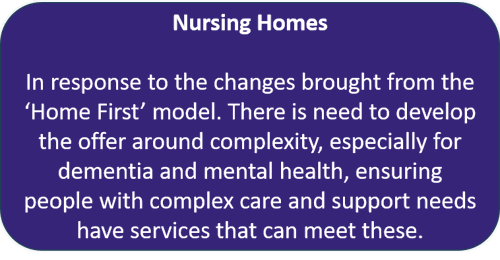
The Home First model has begun to show a cultural shift from nursing homes to favouring people remaining within their own home for longer, therefore the level of complex care that people enter into nursing provision has increased, which has increased pressure for providers to adjust rapidly to care needs, rather than people moving into this provision with lower needs, that develop into more complex care whilst in the home.
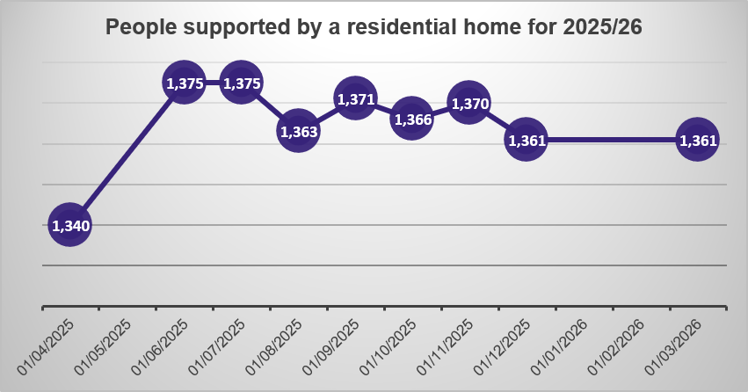
 

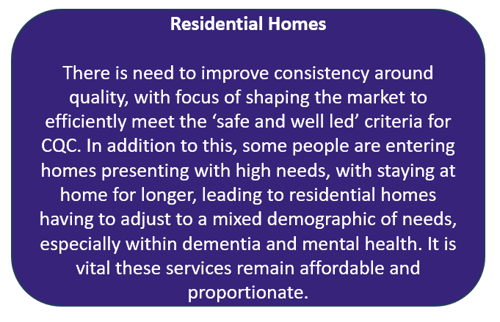
Similar to nursing homes, the care needs of people entering residential homes has increased as a result of the Home First approach. Some people are now presenting with higher levels of complexity, reduced mobility, and greater dependency, placing increased pressure on providers and challenging traditional models of residential care.

As of May 2026, the sector is operating with a reported vacancy rate of 15%. Overall quality across the market is mixed, with many good providers delivering safe and compassionate care, there persists the need to improve outcomes that directly affect lived experience. With primary focus on shaping the delivery of meaningful activities, food quality, and day-to-day engagement with people within residential homes. 


High turnover of registered managers is of significant concern, with frequent changes in leadership that have reduced consistency, impacted staff morale, and reduced contract compliance and quality assurance for this sector. This turnover also reduces the effectiveness of improvement support and contributes to repeated cycles of decline and recovery. Despite system wide support, some residential homes continue to be rated as requires improvement, highlighting the need for consistency in support provided and leadership with this sector.

Quality monitoring is highlighting a need to support residential sector to improve consistency around good governance and ensure that providers are meeting CQC standards for safe and well led to improve quality of care people receive.

High percentage of learning disability and mental health provision is currently procured through spot arrangements. Intentions are to review these arrangements and deliver better outcomes for people through commissioning these services through frameworks.

The market has begun to develop specialist provision, such as dementia units within larger residential homes. While this reflects attempts by providers to respond to increasing complexity for people entering residential care, these developments are a risk of inconsistent standards and shared expectations, as they are rarely developed with commissioning involvement. 


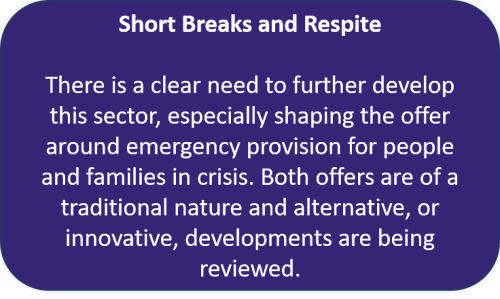
Wakefield’s current Respite and Carer Short Breaks offer is delivered through general and specialist provision, supporting carers and people with care and support needs across a wide range of situations. The offer aligns with Care Act 2014 duties to support carers and prevent escalation of need, however, there is limited capacity and availability of a consistent offer across the district.
Carer Short Breaks deliver the preventative offer, such as relief for carers of people in need of support, including flexible, free or subsidised activities. These could be from a few hours to a few days, offering access to hospitality, leisure, or wellbeing activities without cost and without formal assessment, promoting prevention, resilience, and carer wellbeing. However, Carer Short Breaks do not include replacement care, such as providing personal care, this limits their suitability for carers supporting people with high or complex needs.
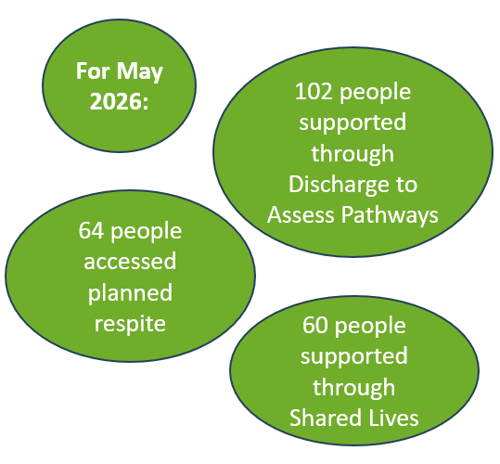
Respite, for over 65s and mental health, or also locally referred to as ‘Short Breaks’ for learning disability, is offered through a mixture of in-house and external market provision, especially for emergency overnight support. Planned respite for carers and people in receipt of care can be offered through residential homes, shared lives and direct payments. At present demand for overnight breaks within planned respite exceeds capacity, leading to the requirement to review the offer around planned respite and potential alternatives to traditional respite models.


Last updated: 21/08/2026