Accessibility

Accommodation with Support

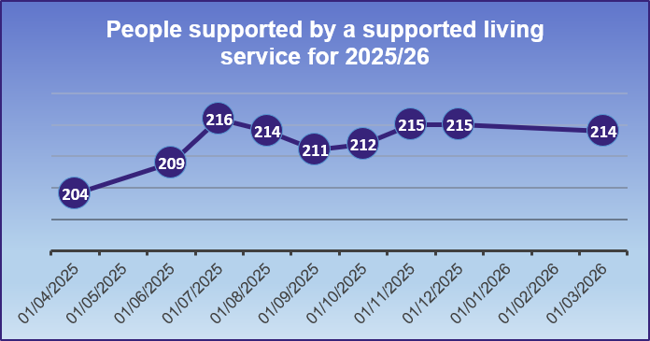
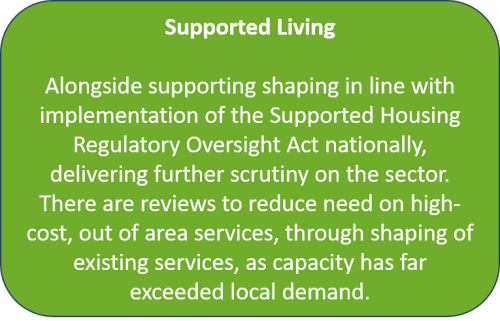
The supported living sector has had recent growth in the capacity of provision, however this has far exceeded demand within this service type. There is a large saturation within the Learning Disability focused supported living offer, with a large focus on shared accommodation, in a time when people are more often wanting their own front door. Wakefield has a consistent vacancy rate of 20% within district, showing a need to prioritise quality over quantity within this offer.
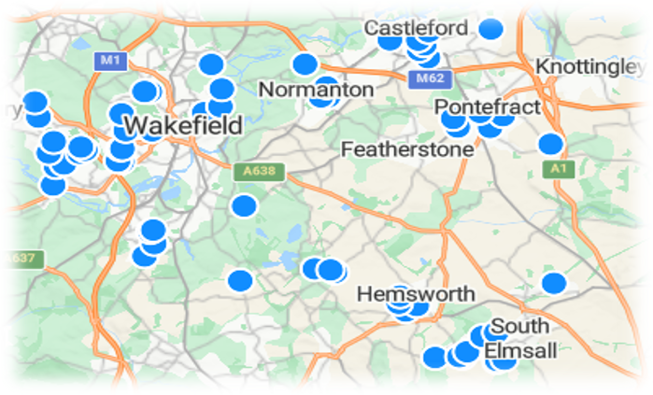
Map of supported living provision across the Wakefield district

At the same time, as much of this provision remains focused on Learning Disabilities, there is limited specialism in mental health provision. There is a gap in flexibility to meet the changing needs of people in need of support. This reduces the market’s ability to respond to complexity, especially recovery‑focused pathways for those with Mental Health conditions. This limited offer is impacting people’s ability to access timely, appropriate accommodation that supports recovery and independence. There is potential for existing services to redirect their offer to better suit the unmet demand.
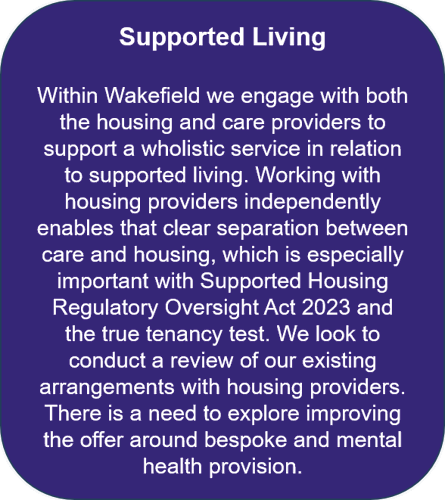
Due to the high proportion of shared accommodation, compatibility can present a persistent blocker to new referrals. This reinforces the need to promote “own front door” options, which is now a national shift in expectation from modern supported living models. Additionally, there is need to review the partnership between housing and care, to ensure that priorities are aligned and supporting people to move into more independent offers once their need for supported living services has reduced.

Review of the existing provision within the district to better support the known gaps, working with providers to redirect their offer to deliver for the unmet demand will support in reduction of the need to utilise high-cost out of area provision for the people with the most complex care and support needs. This includes understanding of a complexity model, that will better inform both the Council and providers of what complexity is, and who meets that threshold within the services being delivered.
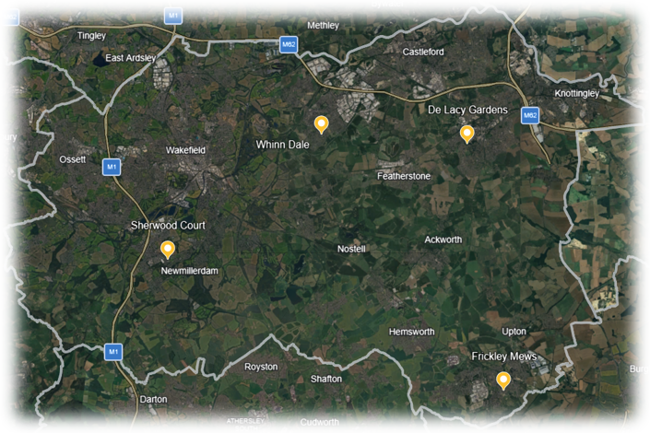
 

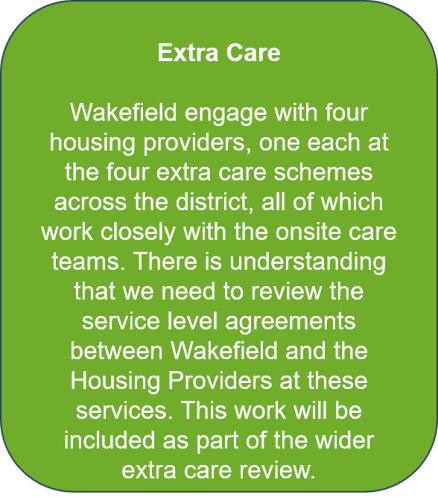
Extra care across Wakefield offers a traditional approach to supporting adults with care and support needs, typically over 65, supporting them to live independently within a supported housing environment. Care provision is split with two supported by in‑house teams, DeLacy Gardens and Sherwood Court, and two through externally commissioned providers, Frickley Mews and Whinn Dale, with housing delivered through different Social Landlords for each scheme. All schemes often operate at full capacity, with a mixture of care needs from people living there, any occasional vacancies are consistently allocated to people on pre-existing waiting lists.
The two extra care schemes delivered through externally commissioned providers have had recent commissioning activity. Whinn Dale is operating at full capacity and continues to experience a high demand for referrals to vacant properties. Frickley Mews, is under redevelopment, although currently open for people that lived there before these began, it has been closed for new referrals since the start of this work. With the aim of opening to new referrals by the end of 2026, this will bring the sector back to full capacity, but in silo will not address the wider lack of capacity against demand.

Map of extra care schemes across the Wakefield district

Despite these pressures, the extra care model across Wakefield offers both a prevent, reduce, delay model of delivery, with allocations allowing a flexible approach to care and support, with people’s needs ranging from low housing and tenancy assistance to near 1:1 and 2:1 wrap around care for people with complex needs.

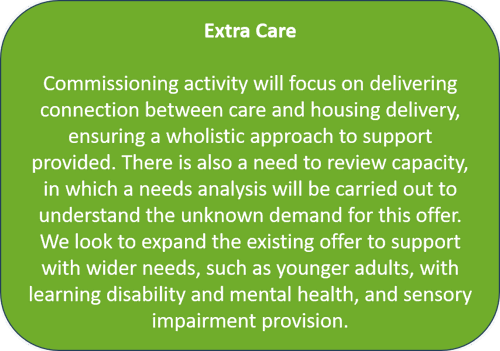
Given the sustained demand, limited vacancies, extra care will be a priority of review, with commissioning led initiatives to meet demand. This review should develop a clearer understanding of the existing offer across both in‑house and external provision, assess how well current models meet future demand, and ensure alignment with demographic trends and care pathways. We aim to increase accessibility and inclusion within our services going forward, including learning disability and mental health provision within extra care. To support this, we look to review the allocations process, with further input from commissioning, to support mixed dependency levels and avoid a higher proportion of people with low care and support needs within extra care.

Wakefield Council engages with both housing and care providers to support a holistic approach. Strengthening this integrated commissioning approach will be essential to ensure extra care provision remains sustainable, responsive, and capable of meeting future need while supporting independence and preventing escalation into higher‑cost care settings. With Waiting lists are evident across extra care provision throughout Wakefield, highlighting a system‑wide gap in capacity rather than a gap in provision at any one scheme.


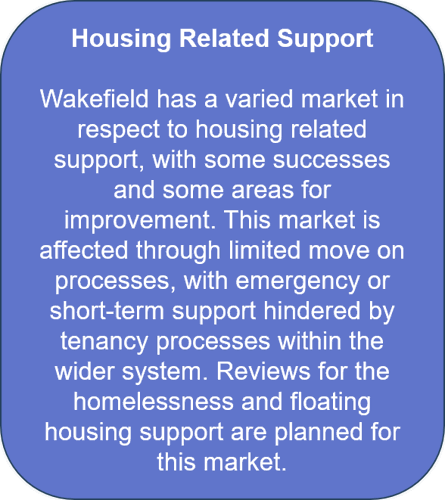
Adult Social Care within Wakefield closely works with the social housing providers to deliver our various accommodation with support services, extra care and supported living, including our preventative offer through housing related support. Below are the overviews for each provision type and how we work with social housing providers to deliver wholistic services that support peoples care and housing needs.


Last updated: 21/08/2026